

This article is inspired by the original post on ahmedabdelsalamyounes.com and is crafted to share the remarkable story of yeast with a global audience.
Let’s travel back in time—not hundreds, but thousands of years—to an era when humanity was just beginning to grasp the fundamentals of agriculture, settlement, and the simple act of baking. This is the story of a forgotten piece of dough, a happy accident, and the microscopic miracle that gave us the soft, airy bread we love today: yeast.
The Dawn of Bread: A World of Fire and Stone
Ten thousand years ago, our ancestors were pioneers of a new world. Having recently discovered the cultivation of wheat and barley, they would grind these grains, mix them with water to form a simple paste, and spread it on hot stones near a fire.
The result? A flat, dense, and unleavened bread. It was nourishing, yes, but it was purely functional—a means of survival. It lacked the life, the texture, and the soul of modern bread. This was the state of baking for centuries, until a moment of carelessness changed everything.
A Forgotten Dough: The Miracle in the Air
As the story goes, one day in the fertile lands of ancient Egypt, a baker was preparing this simple dough. Distracted, they left it unattended, exposed to the warm air. Upon returning, they found the dough had transformed. It had risen, swollen with air, and felt strangely soft and alive.
Believing it was spoiled, the baker was tempted to discard it. But curiosity, or perhaps necessity, won out. They baked the “spoiled” dough anyway.
What emerged from the fire was unlike anything they had ever experienced. The aroma was new and enticing. The bread was light, filled with tiny air pockets, and wonderfully soft. This was humanity’s first encounter with natural fermentation—the magic of wild yeast captured from the air. It was, perhaps, the greatest culinary accident in human history.
The Egyptian Mastery: Masters of Bread and Beer
The ancient Egyptians were not just builders of pyramids; they were geniuses of agriculture, fermentation, and natural science. They didn’t just stumble upon this discovery; they harnessed it, perfected it, and built an entire industry around it.
The Birth of Beer: A Liquid Legacy
The Egyptians quickly realized that this fermented dough had another secret to share. When mixed with water and left to ferment further, it produced a sweet, slightly intoxicating liquid. This was the birth of ancient Egyptian beer—a sacred, nutritious beverage that was a staple for everyone from the pharaohs to the farmers.
The World’s First True Bakeries
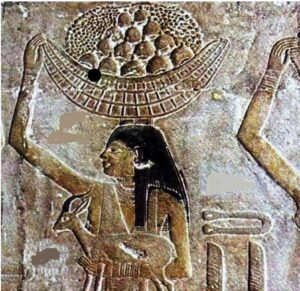
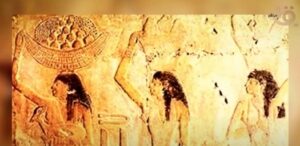
Ancient Egyptian tomb paintings, dating back over 4,000 years, depict a sophisticated baking process:
- Kneading: Workers are shown kneading large quantities of dough.
- Fermenting: Dough is left in pots to rise.
- Shaping: Loaves are formed into various shapes—round, conical, and even animal-shaped.
- Baking: Bread is baked in conical clay ovens.
They were the first civilization to establish true bakeries, producing dozens of different types of bread. They relied on the wild yeast in the air and on the grains themselves—the very same principle behind what we now call sourdough.
Sourdough: Microbiology Before Science
The ancient Egyptians didn’t know about microbes or bacteria, but they understood the results. They learned that by taking a piece of the fermented dough (a “starter”) and adding it to a new batch, they could consistently replicate the leavening process. This was the world’s first sourdough starter, a tradition passed down through millennia.
What Exactly is Sourdough?
Sourdough is not just a type of bread; it’s a culture. It is a symbiotic colony of:
- Wild Yeasts: Natural, airborne fungi that produce carbon dioxide, making the bread rise.
- Lactic Acid Bacteria (Lactobacillus): Beneficial bacteria that create the characteristic tangy flavor and offer significant health benefits.
- Enzymes and Organic Acids: Byproducts of fermentation that transform the dough.
The Health Benefits of Sourdough
The long fermentation process of sourdough bread makes it uniquely beneficial:
| Benefit | Scientific Explanation |
|---|---|
| Easier Digestion | The fermentation process breaks down gluten, making it easier for the body to digest, even for those with mild gluten sensitivity. |
| Improved Gut Health | The presence of Lactobacillus bacteria acts as a prebiotic, feeding the good bacteria in your gut and improving overall digestive health. |
| Lower Glycemic Index | Sourdough bread has a lower glycemic index compared to standard bread, causing a slower, more stable rise in blood sugar levels. |
| Enhanced Nutrient Absorption | Fermentation breaks down phytic acid, an anti-nutrient that inhibits the absorption of minerals like iron, magnesium, and zinc. |
| Rich, Complex Flavor | The slow interaction between yeast and bacteria creates a deep, tangy flavor that cannot be replicated with commercial yeast. |
A Legacy 4,000 Years in the Making
Why is sourdough the closest we can get to the bread of the pharaohs? Because it follows the same ancient, natural principles:
- It uses a living, fermented starter.
- It relies on wild, natural yeasts.
- It embraces a slow, patient process.
- It produces the “real” taste of bread, unaltered by commercial additives.
The only difference is that today, we understand the science behind the magic they pioneered thousands of years ago.
Conclusion: A Story in Every Loaf
The story of yeast is a testament to human ingenuity and our deep connection with the natural world. It began with a forgotten piece of dough and was perfected in the bakeries of ancient Egypt. They didn’t just invent leavened bread; they laid the foundation for a craft that nourishes and delights us to this day.
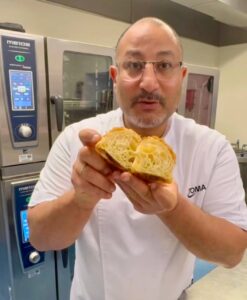
Today, bakers like Chef Ahmed Abdelsalam Younes are continuing this ancient legacy, reviving the art of naturally fermented bread that not only tastes incredible but also heals and nourishes the body. Every loaf of sourdough tells a story—a story that began 4,000 years ago on the banks of the Nile.